
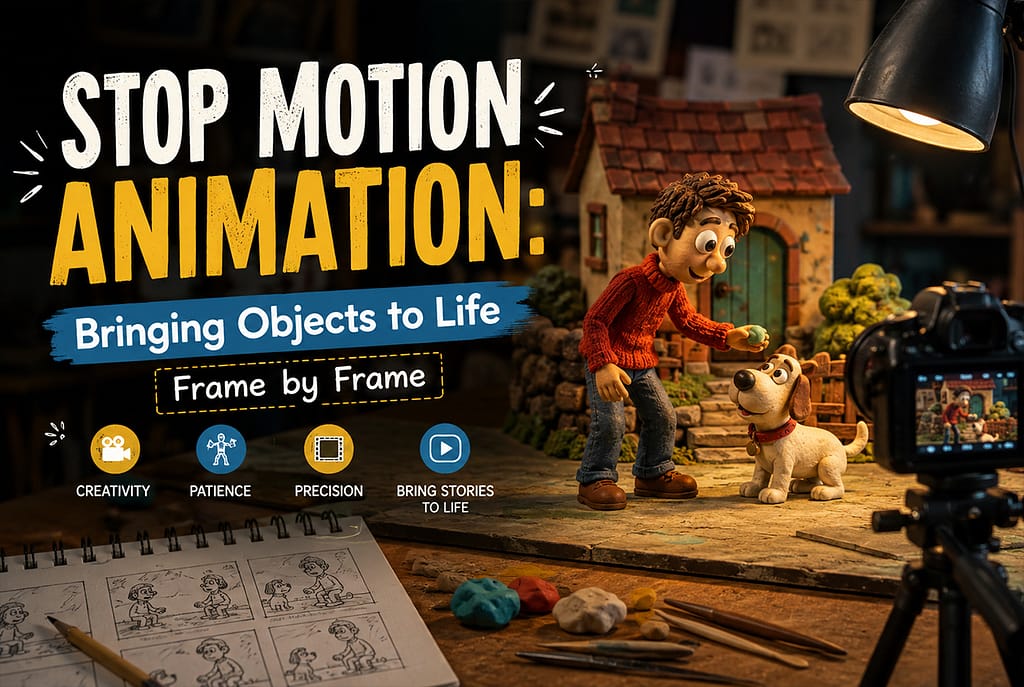
Stop Motion Animation: Bringing Objects to Life Frame by Frame
Animation is one of the most creative methods of visual storytelling. While contemporary animations involve sophisticated software and technology, some...
40, Kalyan Colony, Opposite Gaurav Towers, Malviya Nagar, Jaipur, 302017
+91-7878504947, +91-9314962972
View in the Map
301, Shyam Anumkampa
Nr. Ahinsa Circle
Ashok Marg C-Scheme, Jaipur, 302001.
+91-9314962972, +91-6376970482
View in the Map
H-25-26, Subhash Nagar Shopping Centre, Near Jain Chest Care Center, Shastri Nagar, Jaipur, 302016.
+91-9314962972, +91-8302708994, +91-9568245350
View in the Map
Ever seen an animated movie, played a video game or visual effects movie and wondered about the visuals involved in them? Maybe, you like drawing, character designing, digital arts and making designs on the computer. In this case, you should think about taking up animation as a career after Class 12.
Making a career choice is often a perplexing experience for many students. While some students might prefer conventional careers, there are those who prefer pursuing their passions and developing skills along the way. Animation is one such profession which involves creativity, technology and visual designing altogether.
The best part about this profession is that you don’t have to be a professional artist before learning about animation. With proper guidance and dedication towards the skill development, beginners can make a career out of this.
In case you wish to pursue a career in this sector, this article will help you learn about the things that you need to know about starting off your career in animation.
At Arena Animation Jaipur, students are given opportunities to pursue a variety of creative learning options including animation, visual effects (VFX), graphic designing, game designing etc.
It is essential to comprehend what animation entails before enrolling in any program.
The animation technique consists of making the illusion of motion using images, drawings, or digitized frames. This technique is utilized for films, TV shows, advertising, video games, education, social networking sites, and other kinds of digital media.
These days, animation is not restricted to animated characters only. It also comprises of realistic 3D environment, product visualization, animation ads, explanatory video, and digital experiences.
For instance, when you observe a character running in the fantasy world of a film, then perhaps an animation team has created that character, modeled its body, added textures, motion, and rendered the scene.
Several experts collaborate on bringing those visuals into existence.
To learn about the different learning opportunities, visit the animation courses offered by Arena Animation Jaipur.
Yes, you can learn animation even after completing Class 12. It would be an appropriate time when you can experiment with creative domains and acquire skills which could be used in animation or other related areas.
You do not need to belong to any school stream in order to start learning animation. But admission conditions may differ for the courses, so you should consider the eligibility criteria of the course.
This is how students of various streams can apply animation:
Science students: You might like 3D modeling, technical animation, simulation, game designing or some other technological creative area.
Commerce students: You can experiment with animation, motion graphics, digital content creation, advertising and other creative domains in visual communication.
Art students: You might enjoy character design, storyboarding, illustration, 2D animation and visual storytelling.
This is only a possible route, there are no fixed rules. Your school stream will have nothing to do with your creative capabilities. The main thing is your desire to learn and practice and know something about visual concepts.
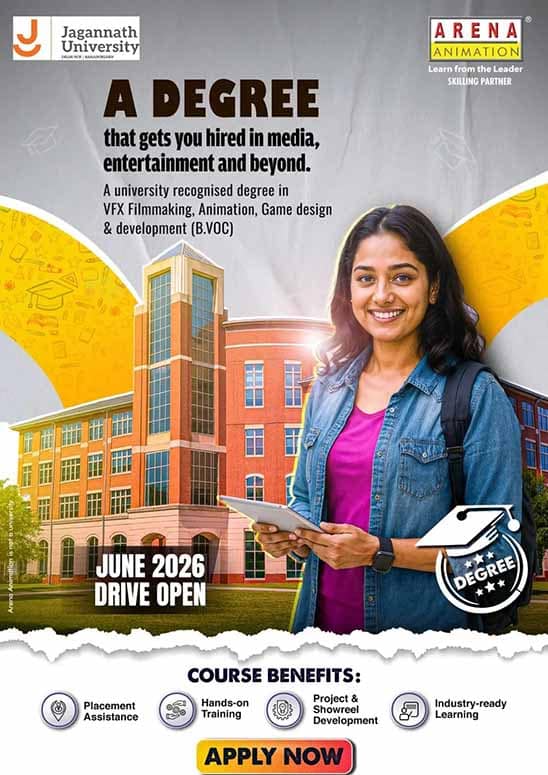
Students who want to explore structured education can also review the 3-year B.Voc. degree programme at Arena Animation Jaipur and confirm its current eligibility and admission details.
One of the most significant decisions that you need to make is to select the area of animation that you are interested in.
There is no requirement for you to learn all creative skills in one go. Begin by knowing about the various specializations and how each one functions.
2D Animation
2D animation makes an image move in a 2D environment. This type of animation can be seen in cartoons, educational videos, commercials, and more.
If you enjoy sketching characters and their movements, then 2D animation could be a good choice for you.
3D animation is a process that uses digital technology to create images that contain depth. It can include modeling, texturing, lighting and animating objects or characters.
3D animation is used in movies, gaming, product visualization and in digital media.
Get an insight into the Animation Prime course at Arena Animation Jaipur.
Visual effects are created in order to produce or intensify those things that might prove to be challenging or impossible to record with a camera.
This could involve green screen backdrops, explosions, digital sets, wire removal, and mixing live action footage with computer generated graphics.
If you have an interest in the technical aspects of film making, then you should try out the VFX Film Making course.
A video game is a combination of story, art, sound, interactivity, and technology. As per the job profile, the creatives can contribute in developing character designs, environment designing, UI/UX designing, graphics, or user experience.
Game Design can be a good career option for those who love to play games and would like to learn how they are designed.
Know More about the Game Design Course at Arena Animation Jaipur.
It is unnecessary for you to learn all the skills that you will be using throughout the animation process from the very beginning of the course. It is much better for you to lay the foundation and develop your skills progressively.
Drawing and Observation
Simple drawing can teach you a lot about shapes, proportions, poses, and characters’ design. Even if you are going to animate mainly in 3D, drawing can help you to communicate your idea and visualize scenes.
You don’t have to be a great drawer. What is needed is regular practice instead of striving for perfection of each and every drawing you create.
Movement
The process of animation consists in creating the movement which looks natural or, at least, stylized in some special way. Study how people move while walking, running, jumping, and expressing their emotions. You can create your own animation exercises based on such observations.
Storytelling and Imagination
Not only does a good animation have to be beautiful but it should also convey a message or a story.
Learn how to organize a scene, how to arrange its visual components, and how to direct the viewer’s attention.
Software Proficiency
The software that animation experts rely on varies according to specialization. The software includes Blender, Autodesk Maya, Adobe After Effects, and other programs for modeling, animation, compositing, or motion graphics.
There is no need to know everything at once. You should determine your preferred field of creativity and learn how to operate the corresponding software.
Patience and Problem Solving
Your first attempt to produce an animation film may not be perfect. A character can behave weirdly, the lighting effect can be dull, and a frame can take more time to render than expected.
It is natural when you are just learning. It is crucial to analyse mistakes, accept criticism, and keep trying.
Animation can be learned independently using online sources, but you may need a course to learn systematically, practice certain techniques, and get feedback on your creations.
While choosing an animation course, do not depend upon the name of the course but rather see what you would learn and the amount of project-based practice time that you would get.
The right course for you should help you get knowledge of basics, software knowledge, practical assignment completion, and creation of portfolio showcasing your skills.
Before joining the course, find out from the institution about:
Students at Arena Animation Jaipur have many choices of courses in the field of animation, VFX, graphics, gaming design, and other creative streams.
One of the worst things that many novices do is wait until the end of their course to put together a portfolio.
Portfolio is basically a body of your work which demonstrates your talent and skills, and potential employers or clients could use it to see how much you can do.
You can begin collecting your portfolio not by waiting for your first film or complex animation but by doing smaller projects instead.
They can be such things as:
As you develop your skills, you should replace poor projects with better ones, don’t upload everything just because you did it.
In case you are into VFX, you can collect before-after pictures, compositing or green screen projects. For those who like 2D animation, you can collect character animations, storyboards, and other things.
Students exploring other creative fields can also read The Power of Photo Editing – Transforming Images into Visual Stories for inspiration about visual communication and image creation.
The goal is to demonstrate your skills clearly, not simply to show that you have completed a course.
One can use one’s knowledge and skills in animation in various industries that include entertainment, advertising, games, digital media, and product visualisation.
Based on one’s skills and specialisation, some job options available to one are:
2D animator – Creates animations for illustrated characters and objects.
3D animator – Creates animations for digital characters, objects and scenes.
3D modelling artist – Designs digital characters, props, products and environments.
VFX artist – Produces visual effects and integrates various visual elements in final shots.
Motion graphics designer – Creates animated text, shapes, graphics and other visual elements for videos and digital campaigns.
Game artist – Produces characters, environment, and other game-related visuals.
Storyboard artist – Produces visual planning of scenes before actual production.
Freelance creative professional – Tackles various animation, design and digital content projects of suitable nature.
Responsibilities of above mentioned jobs might overlap in small studios and freelance projects.
Opportunities of one would depend upon the individual’s portfolio, skills, communication abilities, experience and requirements of employers and clients.
As you gain experience, you may choose to specialise further, work on larger projects, take freelance assignments, or eventually develop your own creative business.
You might be interested in animation, yet not know how to start. The easiest way would be breaking down the learning process into smaller parts.
Step 1: Study various types of animation. Watch tutorials, analyze the animations, see how each type differs from others, namely 2D, 3D, VFX, and motion graphics.
Step 2: Do some beginner tasks. Start with drawing basic objects and moving them around or using some beginner software.
Step 3: Decide on the specialisation. Find out which sphere interests you the most and look through all the courses there.
Step 4: Acquire the basics of your future specialisation. Concentrate on movement, composition, narrative techniques, principles of design and the software related to it.
Step 5: Complete some small assignments. Apply knowledge you acquire rather than just watch some tutorials.
Step 6: Get feedback on it. Present your work to teachers, fellow students, other learners and use their advice.
Step 7: Create a portfolio. Organize your best work so that you can show how far you have come in your efforts during your applications for internships, jobs, or freelancing.
It is not expected of you to be an expert after a few weeks. Regular practice and openness to improvement will get you farther in building your foundation.
Selecting the right place for studying is one of the major steps of your career path. In addition to the curriculum of the programme, pay attention to whether the institute offers practical learning and assistance related to your interests.
Arena Animation Jaipur has courses in animation, VFX, graphic designing, game designing, web designing, and digital content creation.
Students will be able to study the offered courses and find out which one suits their educational and professional background the most.
It is advisable to learn about the course format, practical tasks, requirements for projects, and possible support from the institution before making a choice.
If you live in Jaipur or nearby areas, you may go to the institute to get more information about the learning process.
You may also browse the courses offered by Arena Animation Jaipur or access the contact us page to inquire about the programmes currently offered there.
The ideal learning environment will make you try things, practice, ask questions, and be confident in your skills.
Absolutely. Sketching can prove quite helpful especially in 2D animation and character design. However, sketching is not very relevant to all specialties. One can start with basic tasks and continue improving their drawing and observation skills.
Your choice must be made based on your own interest and objectives. This can be either 2D/3D Animation, VFX, or Game Design. The syllabus, period of course, practical work, eligibility requirements, and fees must all be considered.
It all depends on the nature of the course, what skills you wish to learn, and how much practice you put into it. Short courses tend to be skill-oriented, while long ones have varied subject matter. Gaining proficiency usually entails doing projects and practicing.
No. Skills required for animation can be applied to game design, advertising, digital marketing, education materials, product visualization, online videos, and more.
A degree is not necessary for everyone working in the industry, but the criteria differ depending on the employer, the position and the programme you are applying for. There is much that can be gained from practical skills, a good portfolio, education, and experience.
Animation training might become a possibility for students with varying educational backgrounds. However, the criteria differ from one program to another. It is advisable that you check the admission criteria of the program you choose.
It could be quite interesting to get into the field of animation post class 12, as there are many interesting aspects of animation which you might like. If you love drawing characters, designing 3D animations, visual effects or game environment designs, then there are many possibilities you can consider.
What matters most is to be curious, select the right path of education, practice consistently, and create a good portfolio reflecting your skills. Do not worry if your initial works seem elementary. Each exercise you complete provides you with an opportunity to learn something new.
With proper planning and efforts, you can slowly become prepared for opportunities in the field of creativity.
If you want to know more about the possibilities of the field of animation, you can begin by visiting Arena Animation Jaipur.
Visit Arena Animation Jaipur to learn more about different animation courses.